The Clinical Nurse Leader program prepares nurses to better understand the challenges and opportunities faced by the broader patient base and healthcare system. Learn how to put evidence-based practice into action and expand your role as a leader.
Program length
36 credits
Plus 540 clinical immersion hours
Program format
Hybrid Online
Coursework is offered in-person or online in the evenings.
Application deadline
Sept. 15
For Spring 2027 semester start
Graduates of this program will be prepared to sit for the national certification exam with the Commission on Nurse Certification (CNC) to earn professional certification as a CNL. Over the last four years, 100% of our CNL graduates passed the CNL certification exam on their first attempt.
Why become a CNL?
There is a critical need to improve the quality of patient care outcomes. Nurses who earn a master's degree as a CNL become clinical leaders who work at the complex intersection of clinical care, population health, and health care management to focus on safety and quality.
Program curriculum & outcomes
We were one of the first institutions to offer a master’s degree aligned with the CNL certification, and we are the only CNL program in Upstate NY. The CNL program features hybrid coursework and an immersion experience/capstone project, preparing nurses to:
put evidence-based clinical practice into action with a focus on safety and quality
improve patient care at the point of care delivery
expand their role as care coordinators, clinical informaticists, unit educators, program coordinators, nurse managers, or nurse executives.
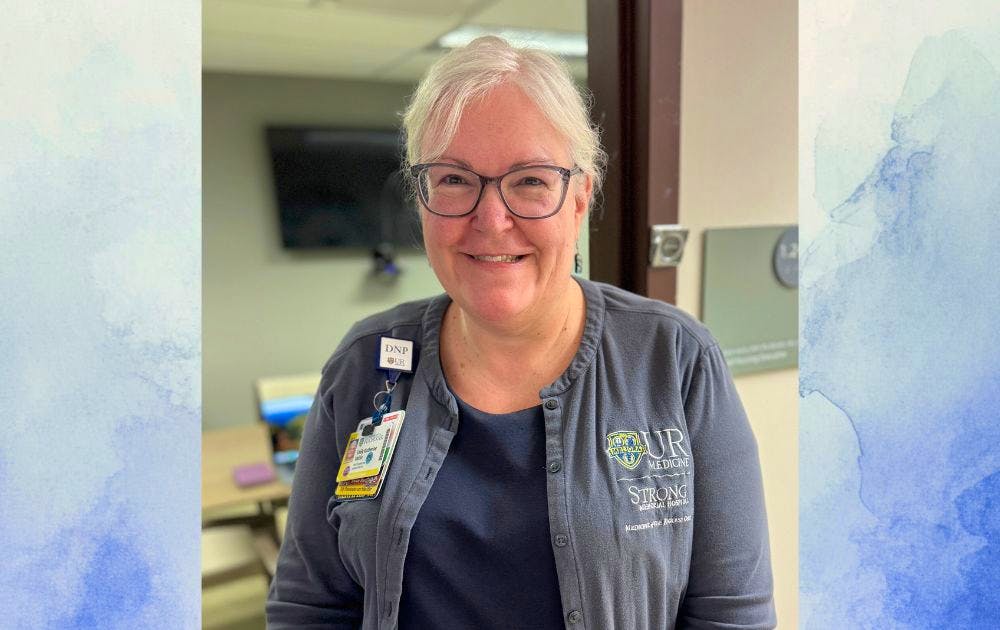
The CNL degree really prepares you to jump into any environment and change it for the better. In my current role, I am able to dive into clinical challenges that people are having or clinical workflows on a unit and find ways for technology to meet those needs.
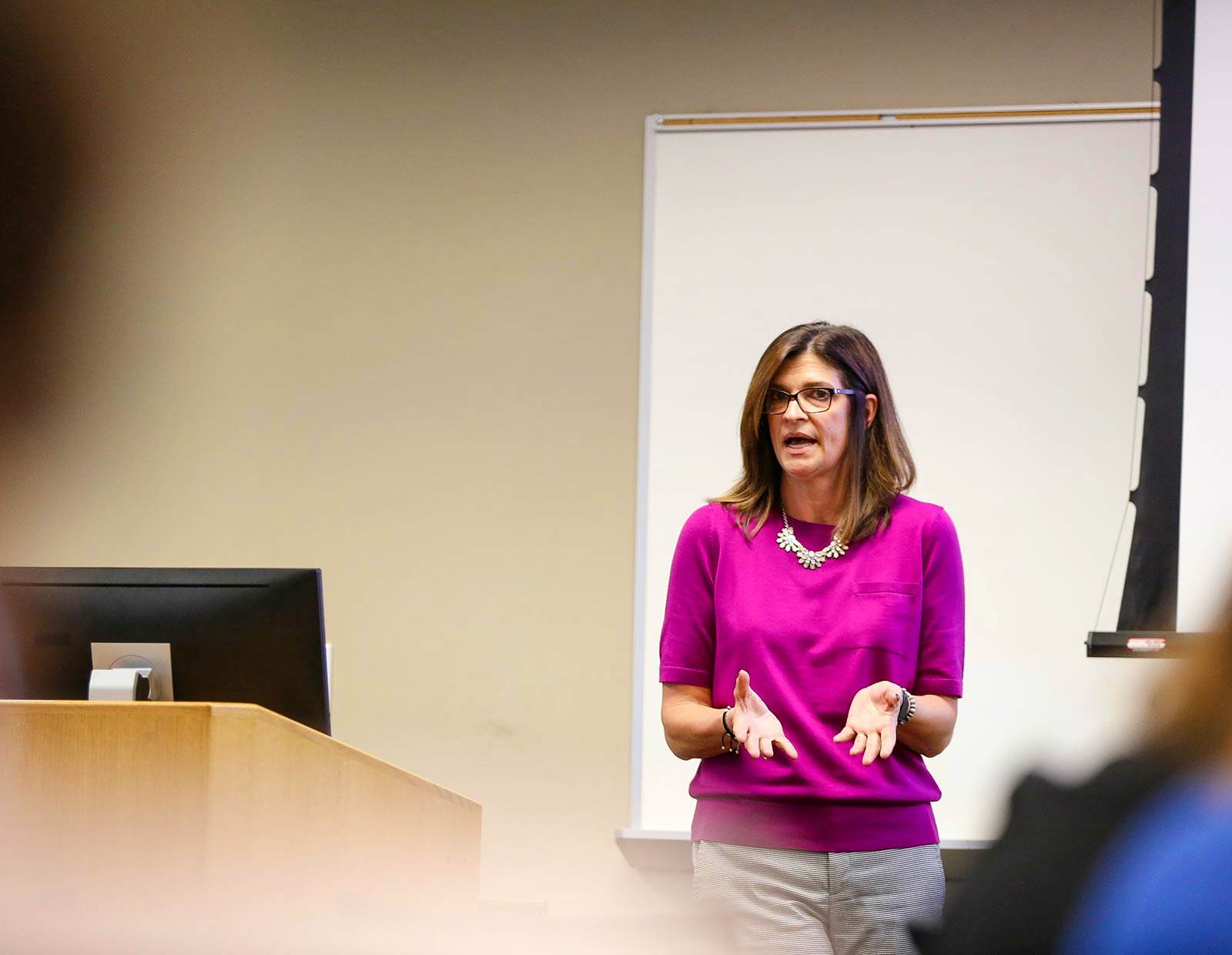
Interim Director, CNL & Leadership in Health Care Systems programs
Joy Lent brings a complementary, practice-informed perspective to program leadership, grounded in more than 20 years of experience across education and clinical care. After beginning her career as a secondary health educator, she transitioned into nursing and practiced as a surgical oncology nurse before joining the University of Rochester School of Nursing faculty. With nearly a decade of teaching across programs, she focuses on student success, clinical excellence, and leadership development. Her doctoral work in higher education leadership centers on capstone experiences and the transition to professional practice—preparing graduates to lead in complex healthcare environments.
 Graduates of this program will be prepared to sit for the national certification exam with the Commission on Nurse Certification (CNC) to earn professional certification as a CNL. Over the last four years, 100% of our CNL graduates passed the CNL certification exam on their first attempt.