Centennial Spotlight: Meghan Aldrich shares journey from pediatric nurse to president
By Gianluca D'Elia
Monday, February 9, 2026
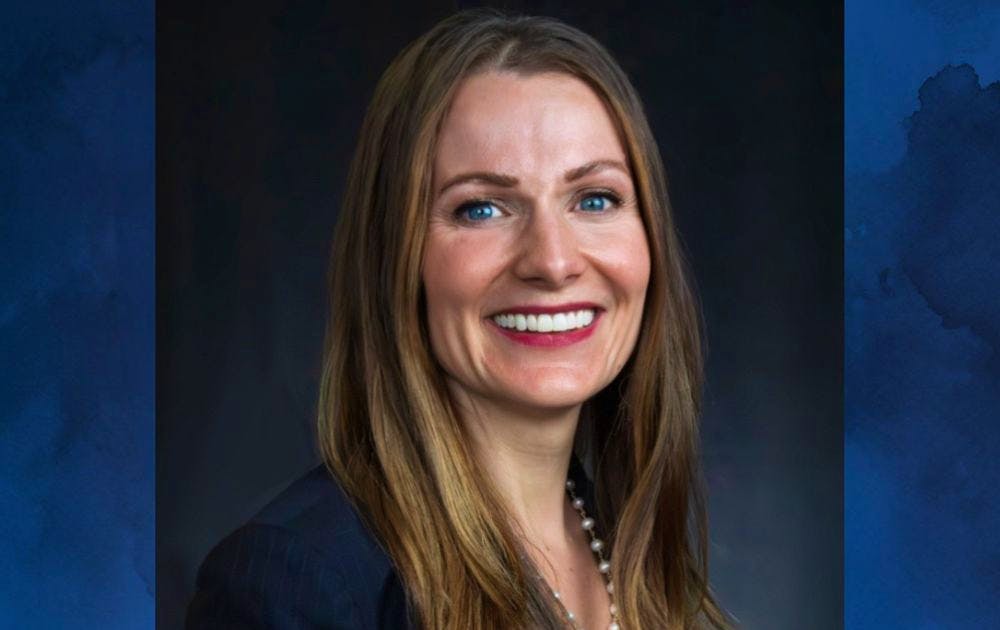
This article appears in the 100 Years Commemorative Issue of Rochester Nursing magazine.
Early in her career as a pediatric nurse, Meghan Aldrich, '08N (MS), ’16N (DNP), MBA, hadn’t pictured herself in an executive role.
“If you had asked me what I saw myself doing on the first day I started my nursing career, I would never have told you this,” she said.
But today, Aldrich serves as president of Sisters of Charity Hospital, a 310-bed hospital in Buffalo that specializes in advanced women’s health, neonatal, and vascular services. She credits her rigorous education and devoted mentors at the University of Rochester School of Nursing for helping her tap into her leadership potential.
Lydia Rotondo, DNP, RN, CNS, FNAP, FAAN, former director of the Doctor of Nursing Practice (DNP) program, and Professor of Clinical Nursing Susan Ciurzynski, PhD, RN-BC, PNP, VCE, FNAP, “modeled the ways that good, thoughtful leadership based in mentorship and genuine care can change the trajectory of people's lives, what they end up doing next, and how they operate in the world,” Aldrich said. “They were my first example of seeing the impact leaders can make on people’s lives and career trajectories.”
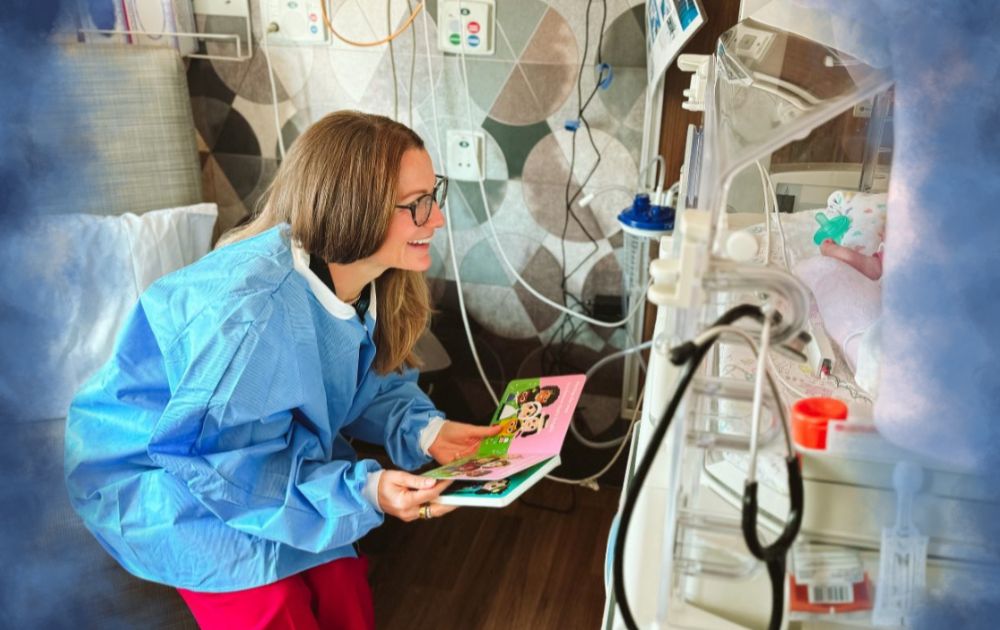
Though her career looks different today than she thought it would as a recent college graduate, her goal across pediatric care and presidential leadership is the same: to give patients a voice. She vividly remembers caring for a young boy with a complex condition when she was a nursing student, and how he shaped the way she provides care.
“I saw this fragile little person, and I was worried about hurting or harming him,” she recalled. “I wanted to be gentle, and he threw himself at me with a huge hug — he was so full of life, and the joyfulness that can be childhood. And then he proceeded to teach me how to take care of him — ‘Miss Meghan, this is how I like you to listen to my chest,’ and how to clean a trach tube and do his wound care.”
“I remember thinking that if this is what nursing care can be, if I get to have a role in working with this patient and his family to the point where this little man owns his experience of his own care, and can help to advocate for himself, that’s the epitome of what I wanted to do with my life. There would be no higher honor and no higher calling.”
Before returning to school for advanced practice degrees, Aldrich worked at Strong Memorial Hospital as a patient care technician in the liver transplant unit while pursuing her bachelor’s at nearby St. John Fisher University. Her passion for pediatrics led her to apply for a newly developed RN role, where she’d split her time between the pediatric ICU and cardiac surgery.
Ciurzynski worked on her unit, and it marked the start of a lasting connection and eventually led her to the DNP program.
“Sue and Lydia not only impacted me clinically, but they have been mentors, friends, and all-around extraordinary people who were dedicated to me as a person,” Aldrich recalled. “They didn't have to invest the kind of time and mentorship that they did in me, or any of my fellow students, but we were each cared for in our own individual ways.”
As a DNP student, she continued to focus on enhancing care for children, evaluating how utilizing simulation as an educational modality improved the quality of pediatric resuscitation as her scholarly project. It gave her a clearer vision of how she could apply the DNP role in her environment.
“There has been a lot of carryover, and the DNP’s degree of interpretability has been highly valuable to me,” she said.
 Q: How did your University of Rochester experience set you up for success?
Aldrich credits her clinical training and DNP credential as part of the reason she was selected for her president role.
“Our CEO had the perspective that clinicians should be executive leaders within the organization, and that people running hospitals should understand how to take care of patients at a very granular level,” she said.
“My training as a DNP has been incredibly impactful and valuable in my work. I am answering clinical, administrative, and operational questions every day, and thinking about how we interpret and apply the work of others that have come before us in our current setting for the betterment of patients and our teams.”
Q: What was it like to pursue a DNP degree early in the role’s development?
Aldrich recalls having conversations about how the DNP role can be interpreted and implemented with her small cohort of 10, which included several nurses with longstanding clinical careers.
“It was obvious that the DNP had a lot of potential to be interpreted practically in a host of different ways,” she said.
“To me, it’s academics in action — it was essentially a program shaped around how we could thoughtfully interpret the world around us, and take the academic work that has already been done and utilize that to actively shape clinical, administrative, or academic environments.”
The program ultimately made Aldrich a more curious, adaptable, and thoughtful leader.
“DNP-prepared nurses are particularly well prepared to navigate rapidly changing clinical, political, academic, and administrative environments, but do so with a particular level of care, thought, inquiry, and a dedication to validation and data exploration,” she said.
 Q: What do you hope your continued impact will be in healthcare?
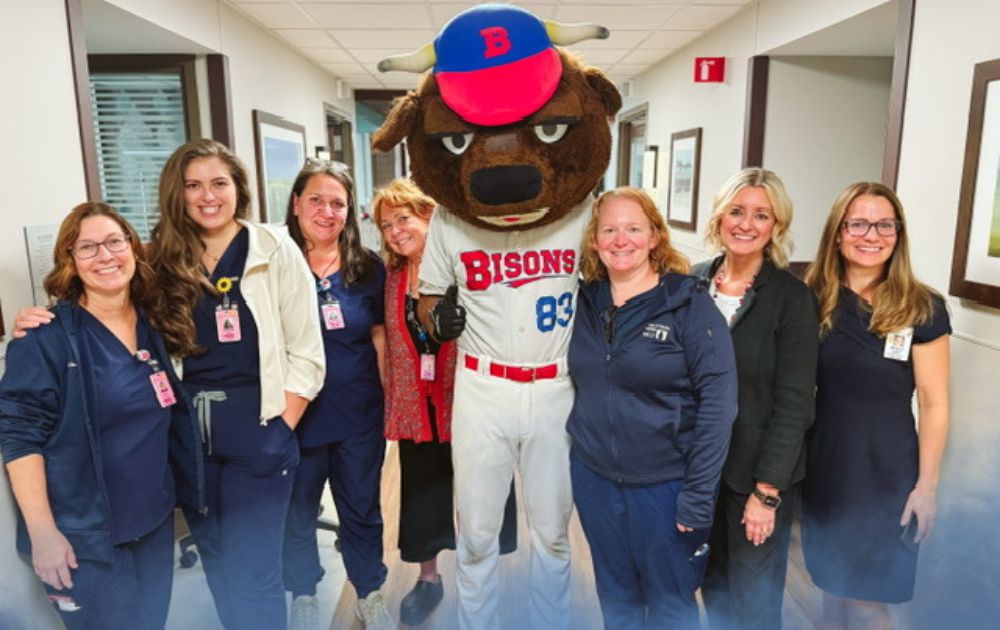
After years of caring for patients at the bedside on an individual level, Aldrich now feels a responsibility “to be a part of the team that takes care of many.”
“I am ultimately responsible for the care of every single patient who comes through our doors. I help others do what they need to do, overcome barriers, better prepare themselves, and work in a wonderful environment so that we can improve patient care for all,” she said.
“The work has shifted, but I think that in healthcare, there is no non-patient care position. We should all be patient-facing to some degree. Even if we work primarily in an office, we have to keep that patient at our desk with us. That’s what anchors me.”
Q: What advice would you share with other nurses?
“Your life is a path with many potential branches. Sometimes people feel that when they are making a decision, they're making a final and unchangeable decision. My career and education are good examples of why that doesn't have to be,” said Aldrich, who originally started at the University of Rochester School of Nursing as an MS-PhD student until she realized later on that the DNP would better suit her goals.
“It’s also important to acknowledge that the work is hard, and it's not meant to be easy. The point of these academic programs is that they push you to grow beyond your current way of thinking or capacity to work, write, lead, or evaluate. You need to grow bigger and better and broader, and the programs push you to do that. The "University of Rochester School of Nursing & Health Sciences" was challenging, but in all of the best and most appropriate ways.”
Meet more University of Rochester School of Nursing alumni and find out how you can get involved in our alumni community. Subscribe to our newsletter for monthly updates and visit our Centennial website to celebrate 100 years of nursing excellence with us.
Categories: Alumni News, DNP News, Nurse Practitioner Programs News