Breaking the silence through simulation: New training helps clinicians build confidence in eating disorder care
By Gianluca D'Elia
Monday, March 16, 2026
Eating disorders affect nearly 10% of Americans, but healthcare professionals rarely learn specifics on how to detect or manage these conditions during their training. Experts from the University of Rochester School of Nursing, Golisano Children’s Hospital, and Western New York Comprehensive Care Center for Eating Disorders (WNYCCCED) are working to change that.
Led by Assistant Professor and pediatric nurse practitioner Meredith Kells, PhD, RN, CPNP, FSAHM, the School introduced a new simulation training to staff nurses, NPs, physician assistants, and students across the University of Rochester Medical Center during Eating Disorders Awareness Week in February.
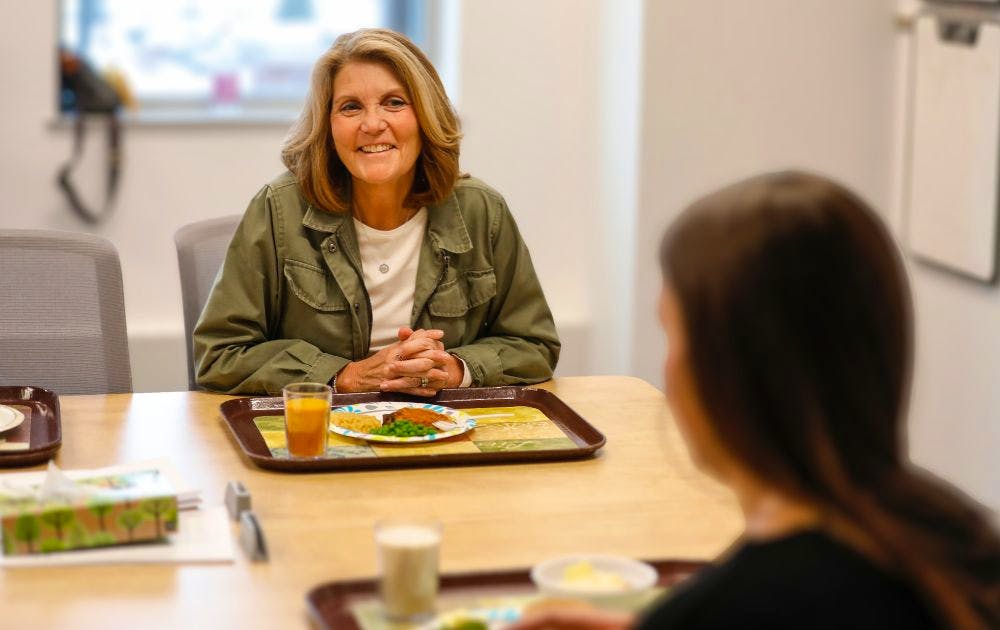
With staff and peer mentors from WNYCCCED stepping in as standardized patients, the simulation introduced participants to situations such as helping a patient in a primary care setting who’s nervous about stepping on the scale, creating a low-anxiety environment for eating a meal during hospitalization; and engaging in a difficult conversation with a young man who’s hospitalized for electrolyte imbalance and heart palpitations caused by excessive exercise, but having a hard time acknowledging the effects of eating disorder behaviors on his health.
Kells, a nurse scientist who researches adolescent and young adult eating disorder care, sees the simulation as a way for participants to pick up new clinical skills and learn more about themselves along the way.
“I hope that participants can use this as a reflective time to consider their own implicit biases, both in their thoughts around people of different body sizes and the language that we use,” Kells said. “We want people to walk away feeling more comfortable in their interactions, whether that means being prepared to talk with someone who’s struggling with an active eating disorder, or having tools they can take into any clinical setting to talk about weight in less stigmatizing ways.”
The session also provided an opportunity for trainees to consider how public messages surrounding weight and diet culture impact their professional and personal lives, and how to discuss weight neutrally.
“Weight stigma and fat-shaming can contribute not only to DSM-5 diagnosed eating disorders, which are a real public health crisis, but even the broader crisis of disordered eating behaviors. As individuals, healthcare providers are subject to that messaging too, and we can easily carry that into our appointments,” Kells said.
The need for broader eating disorder awareness among healthcare providers is urgent. In her clinical practice on the Adolescent Medicine team at Golisano Children's, Kells has noticed eating disorder behaviors and diagnoses appearing in children at increasingly younger ages, often as young as the fourth grade. In response, she and colleagues from Golisano, WNYCCCED, and School-Based Health Centers have developed screening tools and educational programming surrounding eating and body image at local school districts.
“Body dissatisfaction is a precursor to dieting behavior in adolescents. As we see kids referred to us younger across Western New York, we need to move the mark of our prevention efforts,” Kells explained.
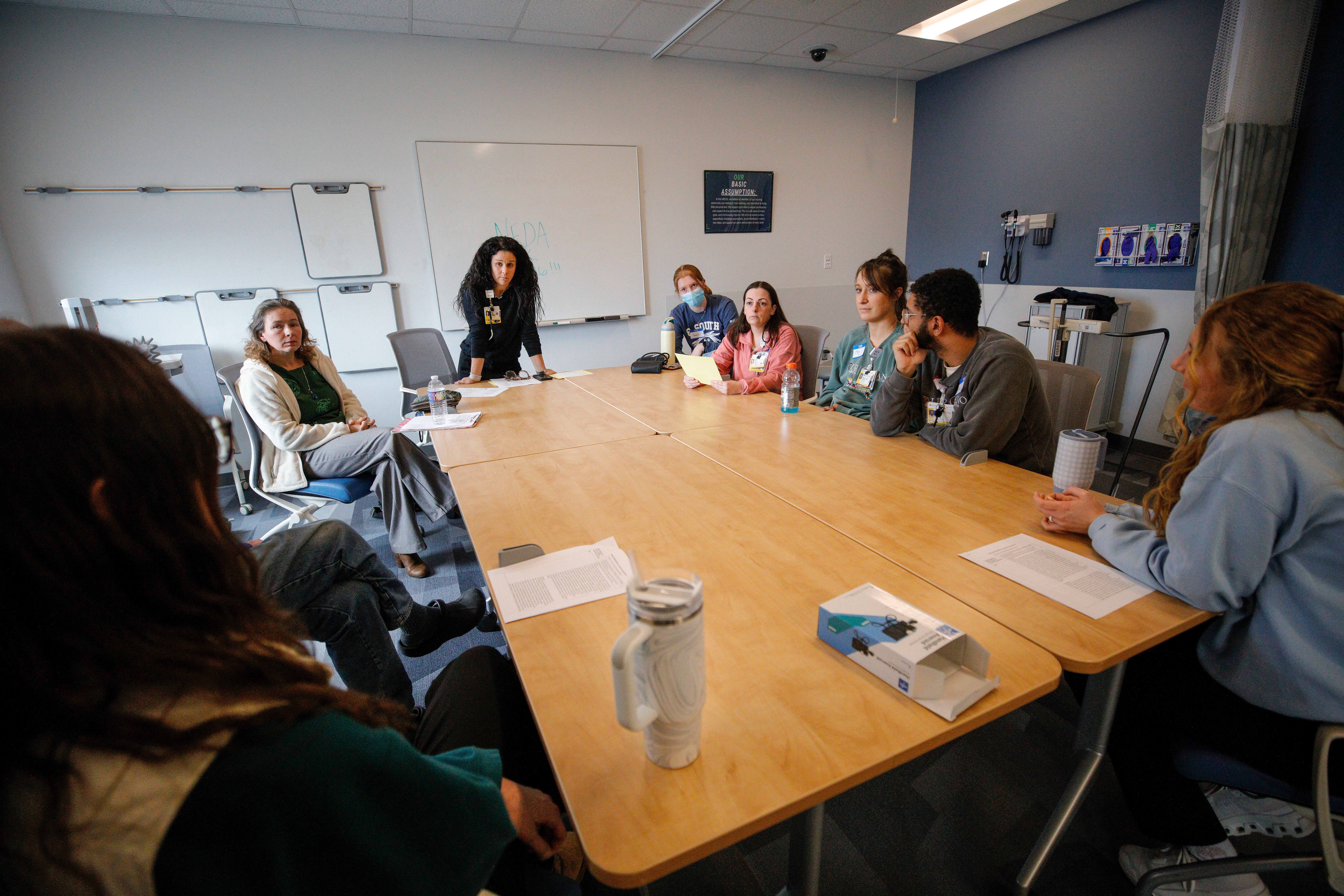
Kells and the WNYCCCED team look forward to adapting the simulation for academic programs at the University of Rochester School of Nursing, as well as various clinical settings at UR Medicine, with the goal of increasing collective knowledge and creating a stronger support network for both individuals with eating disorders and the healthcare professionals who care for them.
“We often hear that it 'takes a village' to support eating disorder recovery, but for many of our patients, that village simply doesn’t exist,” said Michelle Morales, a parent peer mentor at WNYCCCED who provides support and education to families and caregivers. “Our simulation is designed to build that village through collaborative care. By creating a team-based approach, we ensure that no single provider feels isolated in managing these complex cases. This helps us create a strong, recovery-oriented system where treatment is consistent, comprehensive, and ultimately more effective.”
Nicholas Colella, who works as a peer mentor at WNYCCCED and studies social work at SUNY Brockport, acted as a patient in the simulation and felt empowered by the opportunity to shape providers’ future practice by sharing his lived experience in recovery.
“When you can help someone work through a difficult situation and make them think on their feet, they can think of this conversation as an example of how to help next time something like this comes up,” said Colella.
He portrayed a patient expressing anxiety about having his weight measured at a primary care appointment during the simulation. The situation was familiar: Colella remembers going to a doctor’s appointment as a teenager and being told to lose weight, but not being educated on how to do so. “I was 18 and thinking, ‘I’ll just exercise and not eat.’”
“It can be damaging for a teenager to hear they’re overweight,” Colella explained. “There has to be a good way to talk about that… It’s important to know that if someone wants to get better, they need to do it through strength and empowerment, not through hatred of themselves.”
While specialized training can help healthcare providers better understand eating disorders and the ways they manifest, the simulation also helped clinicians tap into skills and qualities that they already had beforehand, such as practicing with empathy, being observant, and asking follow-up questions without judgment.
“I want providers to leave this experience feeling equipped rather than intimidated,” Morales said. “By sharing the psychological aspects of the illness and providing a hands-on framework for care, we move from a place of 'managing a crisis' to 'nurturing a recovery.' Their presence and care — when calm, informed, and empathetic — is one of the most powerful tools in the room.”
Editor’s Note: Visit the Western New York Comprehensive Care Center for Eating Disorders at nyeatingdisorders.org to find information, educational opportunities, and local and national resources to connect with treatment and move ahead in recovery.
Categories: Research News, Patient Care News, Community News