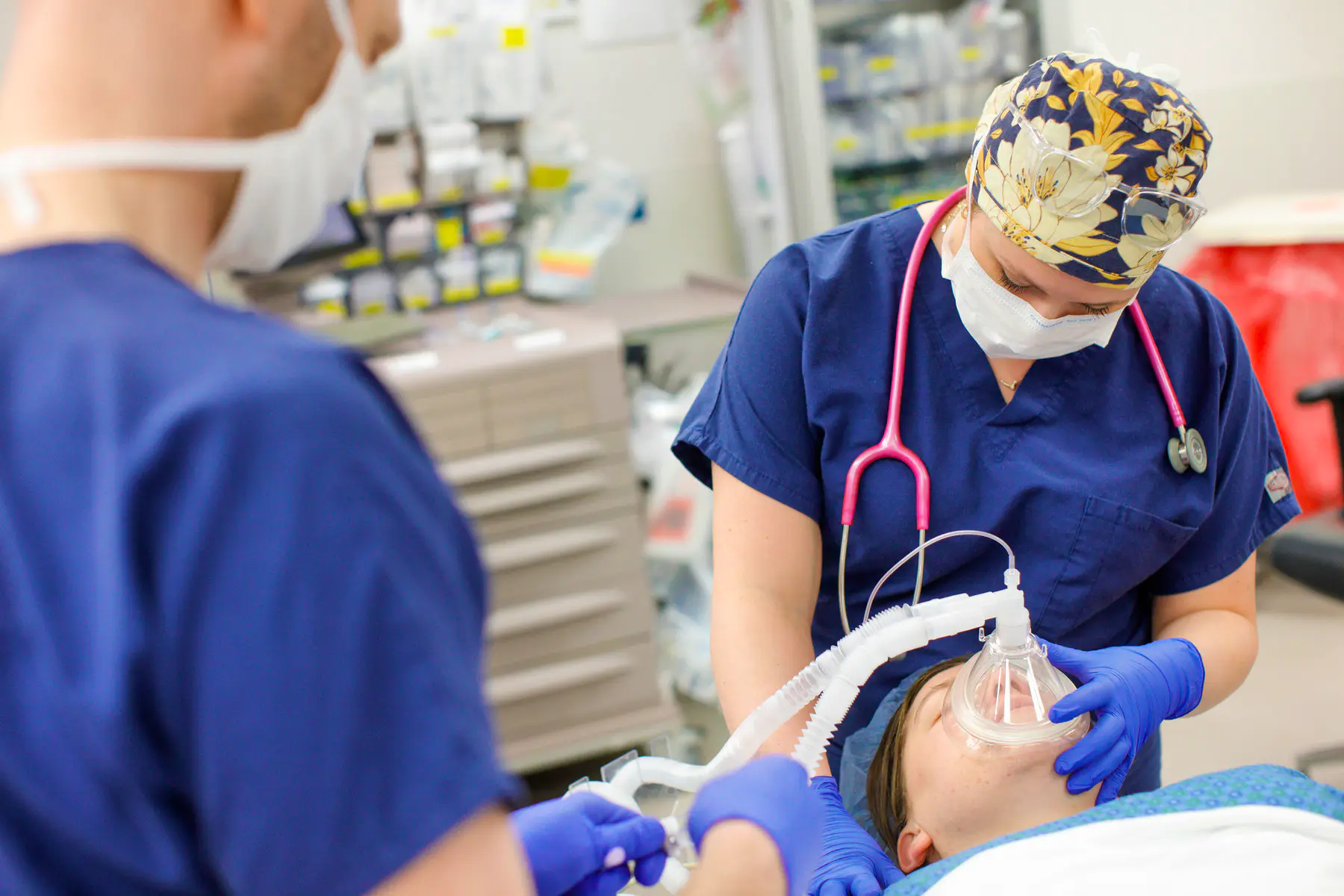
DNP Nurse Anesthesia (CRNA) Program

Advance your clinical expertise and provide anesthesia care through immersive training within a leading academic health system.

The DNP Nurse Anesthesia (CRNA) program, with a dual focus in Adult-Gerontology Acute Care (AGACNP), is an intensive, full-time doctoral program designed for registered nurses who seek advanced preparation in both nurse anesthesia and acute care management of adult and older adult populations. This integrated program prepares graduates to deliver high-quality, evidence-based care in complex clinical environments such as operating rooms, intensive care units, emergency departments, and specialty surgical services.

Program format

Full-time, synchronous

Program length

36 months

Nine full-time semesters

Application deadline

Aug. 31

For Summer 2027 program start

The 103-credit curriculum includes over 2,000 clinical hours, ensuring graduates are clinically competent across a full scope of anesthesia practice and acute care delivery. Coursework emphasizes advanced pharmacology, pathophysiology, diagnostic reasoning, leadership, quality improvement, and interprofessional collaboration. In addition to comprehensive nurse anesthesia training, students complete targeted clinical experiences in the acute care management of pediatrics, adolescents, adults, older adults, and patients with complex and unstable conditions.

Successful program completion awards students with the Doctorate of Nursing Practice (DNP) degree from the University of Rochester School of Nursing. Graduates will be prepared to sit for the nurse anesthesia National Certification Exam through the National Board of Certification and Recertification for Nurse Anesthetists, which is mandatory for practice as a nurse anesthetist. Graduates who pass the NCE are designated as a Certified Registered Nurse Anesthetist (CRNA).
 

Accreditation status

The University of Rochester School of Nursing is fully accredited by the Middle States Commission on Higher Education, with nursing programs accredited by the Commission on Collegiate Nursing Education, and pending accreditation by the Council on Accreditation of Nurse Anesthesia Educational Programs. Learn more about what our accreditations mean for your education and career.

Explore more

Program curriculum

The DNP Nurse Anesthesia (CRNA) program prepares highly motivated nurses to master advanced anesthesia techniques and provide exceptional patient care through a rigorous, evidence-based curriculum.

Application requirements

Learn more about application deadlines, eligibility, and requirements to apply to the DNP Nurse Anesthesia (CRNA) program.

Frequently asked questions

Have questions about the CRNA program? Explore answers to common questions about admissions requirements, curriculum, clinical experiences, and more.

This is an intensive, full-time doctoral program with significant didactic and clinical commitments. Some students may be able to work limited hours during the first two semesters, before intensive anesthesia coursework and clinical begin, but to support safety, learning, and well‑being, employment is strongly discouraged once you enter the core anesthesia and clinical phases.

Once the application deadline has passed, we will connect to schedule individual interviews in the fall. We expect to release decisions in December.

All admitted applicants must begin with their cohort in May 2027.  We anticipate a new cohort (~12 students) to start each May.

Yes, Nurse Practitioners and other Advanced Practice Registered Nurses (APRNs) are welcome to apply if they meet all admission requirements. Applicants who already hold a master's degree in nursing or an advanced practice nursing credential are not typically required to complete the full 103-credit dual-degree curriculum. Following admission, program leadership will conduct an individualized gap analysis to evaluate prior graduate coursework and determine the appropriate plan of study. Any transfer credit or curriculum adjustments will be assessed on a case-by-case basis in accordance with accreditation standards and program requirements.

Eligible critical care experience must be in an intensive care unit setting, including surgical ICU, medical ICU, cardiothoracic or cardiovascular ICU, trauma or burn ICU, neurosurgical ICU, or pediatric ICU. Emergency room, flight nursing, PACU, and neonatal intensive care unit experiences, while valuable, are not considered qualifying critical care experiences for this program.

Clinical placements are coordinated and guaranteed through our established affiliations across the University of Rochester Medicine network and other partner sites in urban, community, and rural or critical access settings. The program team assigns clinical rotations to ensure you gain progressive experience with a wide range of patient populations, procedures, and practice environments.

High-fidelity anesthesia simulation is a core component of the program. Students will regularly train in simulation-based scenarios focused on crisis resource management, airway emergencies, hemodynamic instability, interprofessional teamwork, and complex perioperative cases to build confidence before and alongside clinical immersion. While simulation provides opportunities to practice skills and encounter rare or high-risk scenarios that may not arise during clinical rotations, it is designed to complement—not replace—extensive hands-on clinical education.

Quotation Mark

You’re working at the top of your scope of practice, taking everything you’ve learned in your career, and putting it into practice. You get the opportunity to care for people across the lifespan, to critically think every day, and recognize, diagnose and treat an issue as one person with no middleman.

Alison Henry, DNP, CRNA

Associate Professor of Clinical Nursing
Director, DNP Nurse Anesthesia Program

Quotation Mark

You’re working at the top of your scope of practice, taking everything you’ve learned in your career, and putting it into practice. You get the opportunity to care for people across the lifespan, to critically think every day, and recognize, diagnose and treat an issue as one person with no middleman.

Alison Henry, DNP, CRNA

Associate Professor of Clinical Nursing
Director, DNP Nurse Anesthesia Program

RSVP

Attend an Open House

Join Admissions representatives and faculty for an Open House on Tuesday, June 9. Learn more about our new DNP Nurse Anesthesia (CRNA) program, the CRNA role, program eligibility, and how to apply.

Meet the faculty

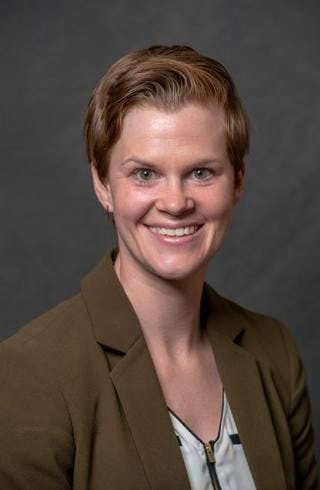
Alison Henry, DNP, CRNA

Alison Henry, DNP, CRNA

Associate Professor of Clinical Nursing
Director, DNP Nurse Anesthesia Program

Alison Henry, DNP, CRNA, is an associate professor and director of the DNP Nurse Anesthesia (CRNA) program, where she is leading the launch of the program, pending COA accreditation. Her work focuses on curriculum design, simulation-based education, clinical partnerships, accreditation readiness, rural health equity, and workforce development. A practicing clinician with extensive expertise, Henry specializes in pediatric and pediatric open-heart anesthesia, difficult airway management, trauma, and ambulatory anesthesia. She has held several leadership roles at the University of Rochester Medical Center, including Chief Nurse Anesthetist, Lead Clinical Nurse Anesthetist for Golisano Children’s Hospital, and SRNA Clinical Coordinator. Henry is committed to advancing nurse anesthesia education, clinical excellence, patient safety, rural health access, and mentorship for future CRNAs.

See Alison's profile
Aaron Acello, DNP, CRNA

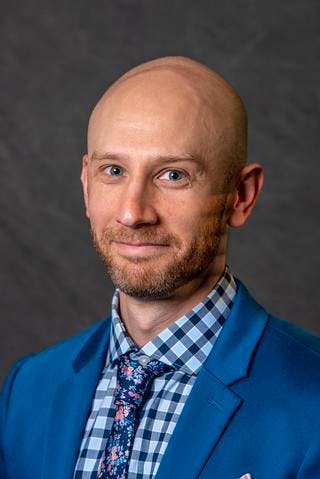
Aaron Acello, DNP, CRNA

Assistant Director, DNP Nurse Anesthesia Program

Aaron Acello, DNP, CRNA, is the assistant director for the DNP Nurse Anesthesia (CRNA) program (pending COA accreditation), a role he assumed in October 2025. He is also a practicing Certified Registered Nurse Anesthetist at Strong Memorial Hospital, where he has provided anesthesia care since 2018. Acello earned his Doctor of Nursing Practice in Nurse Anesthesia from the University at Buffalo in 2018. Prior to his anesthesia training, he received his Bachelor of Science in Nursing from St. John Fisher University in 2012 and gained critical care experience at Rochester General Hospital. During his time there, he was recognized with a DAISY Award for Extraordinary Nurses, a March of Dimes Nurse of the Year regional nomination, and a Rochester General Hospital M. Jeanne Van Niel Excellence in Nursing nomination.

See Aaron's profile

Connect with us

Interested in becoming a CRNA? Connect with us to learn more about the Doctor of Nursing Practice Nurse Anesthesia program from the University of Rochester.

Scroll to top of page