Doctoral Programs
One of the top nursing schools in the nation, the University of Rochester's DNP and PhD programs prepare students to address healthcare’s biggest challenges.

What sets us apart?
1979
PhD program launched
A rich history of doctoral nursing education, with one of the longest-established PhD programs in the country.
#1
Nursing school
Ranked #1 in Upstate New York, according to U.S. News and World Report.
#1
Regional leader
The only academic health system in the region, advancing cutting-edge care, education, and research.
91%
Actively practicing faculty
Expert faculty who maintain an active practice in clinical settings across the region as leaders in their fields.
Practice at the highest level of nursing
DNP Program
- Top 3 DNP program in New York State
- Flexible part-time, hybrid-online format
- Nationally-recognized faculty advisors and practice mentors

Prepare for high-acuity practice as a nurse anesthetist
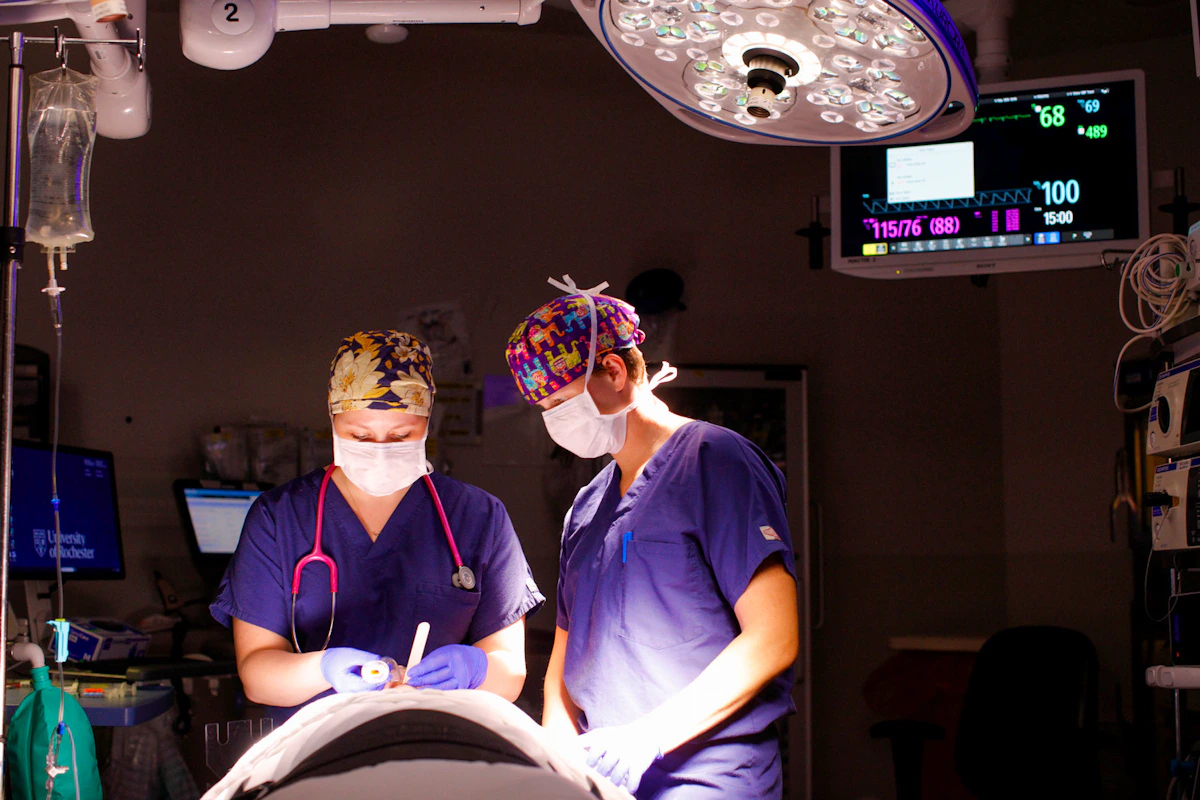
DNP Nurse Anesthesia (CRNA) Program
- Full-time nurse anesthesia program leading to DNP preparation
- 2,000+ clinicial hours, ensuring clinical competence across a full scope of anesthesia practice and acute care delivery in diverse practice settings
- Prepare to sit for nurse anesthesia National Certification Exam through the National Board of Certification and Recertification for Nurse Anesthetists
Advance nursing and healthcare science with a PhD
PHD Program
- Mentored research and interdisciplinary collaboration opportunities
- Research focused on five key areas impacting health outcomes
- Post-MS and Post-BS pathways, with full-time and part-time study options available

Compare programs
| Program criteria | Doctor of Nursing Practice (DNP) | PhD in Nursing & Health Science |
|---|---|---|
| Principal difference | Clinical practice-focused degree that prepares nurses for advanced clinical practice, leadership, and healthcare system improvements | Research-focused degree designed to prepare nurse scientists to conduct original research and contribute to nursing theory and science |
| Primary career paths |
|
|
| Teaching pathways? | Often teach in clinical programs, especially if they bring extensive practice experience | Typically preferred for tenure-track academic positions and research-intensive universities |
| Research? | Focuses on applying research to practice to improve outcomes for patients, families, and communities | Comprises extensive coursework in research methodology, statistics, and theory, culminating in a dissertation |
| Program entry | Post-MS | Post-BS or Post-MS |
| Program format | Part-time, distance | Post-BS: Full-time |
| Post-MS: Full-time or part-time | ||
| Program length | 2-2.5 years | 3-5 years, depending on dissertation and research process |
| Career objective | You want to lead innovative systems-level changes in clinical settings, improve patient outcomes, and influence healthcare delivery directly for individuals and populations | You want to conduct research and advance science with a clear focus on furthering research in nursing and/or teaching the next generation of nurses and researchers to improve patient care and population health |
We stand in a tradition that sees nurses not only at the bedside, but at the center of how health systems are imagined, built, and improved. The strengths of nursing science—our proximity, our focus on translation, our connection to the workforce—are not accidents. They were built this way on purpose.
We stand in a tradition that sees nurses not only at the bedside, but at the center of how health systems are imagined, built, and improved. The strengths of nursing science—our proximity, our focus on translation, our connection to the workforce—are not accidents. They were built this way on purpose.
News & stories


Connect with us
Interested in pursuing an education at the University of Rochester School of Nursing & Health Sciences? Take the next step by requesting more information, scheduling a visit, or starting your application.